Context: training respiratory patient advocates to shape better healthcare, research, and policy
Delayed diagnoses, unequal access to care, limited treatment options, and fragmented healthcare systems: across Europe, people living with respiratory diseases[1] face challenges that go far beyond physical symptoms.
Respiratory patient representatives and organisations play a vital role in addressing these challenges. They raise awareness, engage with researchers, shape policy agendas and work to improve care at national and European levels. Their work is essential to achieving lasting, systemic policy change.
However, effective advocacy requires strategic frameworks, knowledge and skills to drive impactful change. Strengthening the capacity of patient advocates is key to ensure patients' voices are heard in healthcare discussions and policy-making processes.
What is the European Respiratory Patient Academy?
Led by EFA and co-developed with a Steering Committee of European patient organisations — Alpha-1 Europe Alliance, Cystic Fibrosis Europe (CF Europe), European Pulmonary Fibrosis Federation (EU-PFF), Pulmonary Hypertension Association Europe & Global (PHA Europe), TB Europe Coalition (TBEC) and Lung Cancer Europe, the European Respiratory Patient Academy is a project developed with and for the respiratory patient community to strengthen patient advocacy across respiratory diseases. It is an investment in a growing, cross-border movement led by and for patients, to build sustainable advocacy leadership within the respiratory community.
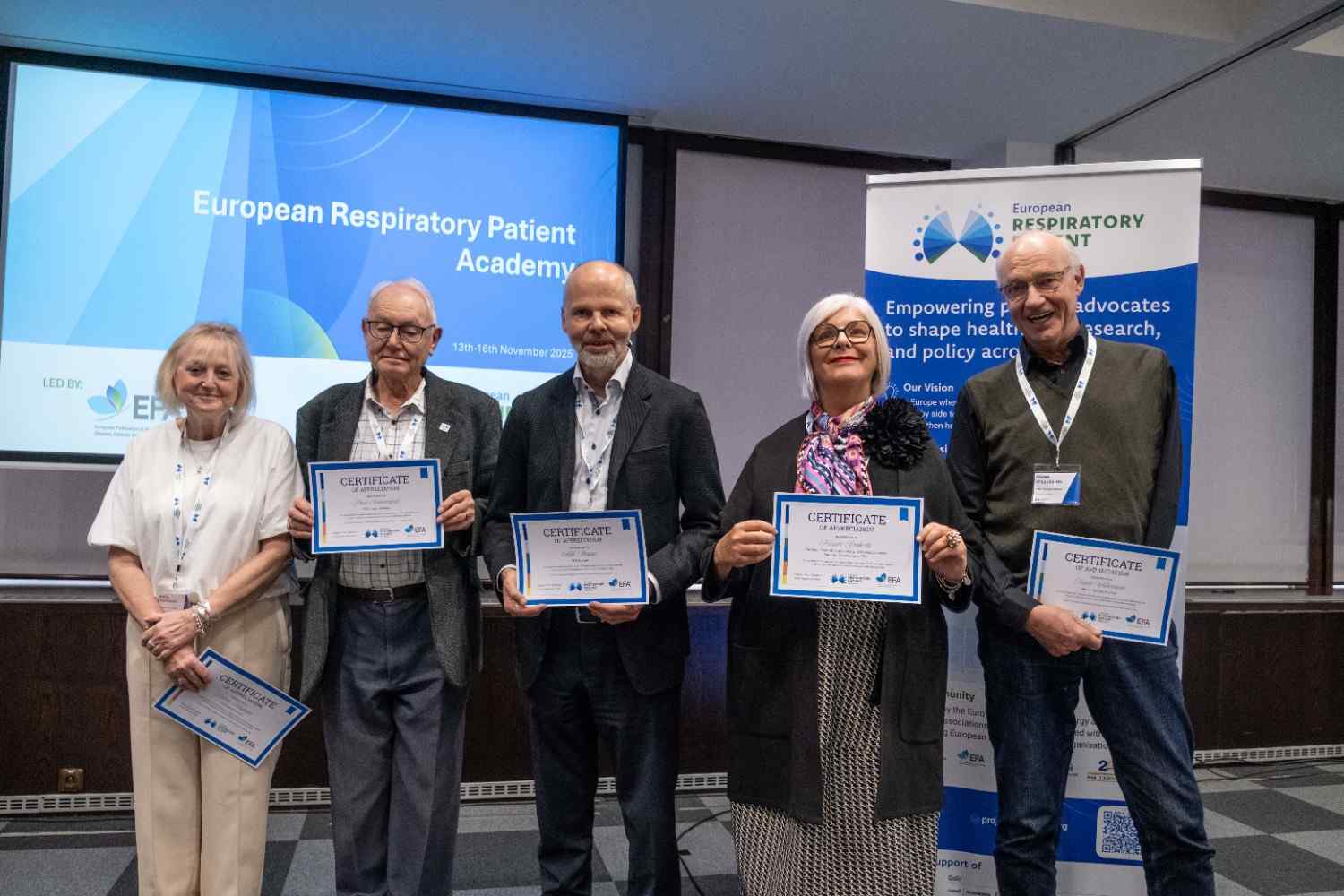
From left to right: Debra Montague (Lung Cancer Europe), Paul Sommerfeld (TB Europe Coalition), Hall Skaara (PHAEUROPE), Marcia Podesta (EFA), Frank Willersin (Alpha-1 Europe Alliance)
Through the Academy, we provide high-quality education that strengthens the knowledge and capacity of patient advocates from across Europe to effectively represent patients and influence decision-makers. We encourage collaboration across disease areas and foster a unified community of respiratory advocates ready to shape better healthcare, research, and policy.
The programme
The Academy offers immersive, in-person training sessions for patient representatives from across Europe, supported by a preparatory series of online webinars. It is a space for respiratory advocates to learn, grow, and drive change together.
Delivered and co-designed by the Steering Committee, the programme includes interactive workshops and expert-led sessions on:
- The role of patients in shaping research
- Navigating healthcare systems and engaging stakeholders
- Advocacy strategy and influencing political processes
- Scientific literacy and interpreting evidence
- Organisational sustainability and resilience
- Tackling inequities in access to care
- Strategic communication and leading change
The programme integrates also the Diversity, Equity and Inclusion (DEI) principles, to reflect the lived realities and diverse needs of respiratory patients and advocates across Europe.
How to participate in the 2026 European Respiratory Patient Academy
We are pleased to announce that the next edition of the Academy will take place from 12–15 November 2026 in Prague. Participation is open only to members of the Steering Committee patient organisations.
For general enquiries about the Academy, contact:
2025 training at a glance (Prague, 13-16 November)
- 4 days, 12 sessions, 70 participants total (including 42 trainees from 23 countries)
- Cross-disease cohort representing 9 respiratory areas
- 21% average learning increase across streams
- 96% felt better prepared and more confident in their advocacy role
- 100% rated the content positively; 80% gave the highest rating
Key outcomes
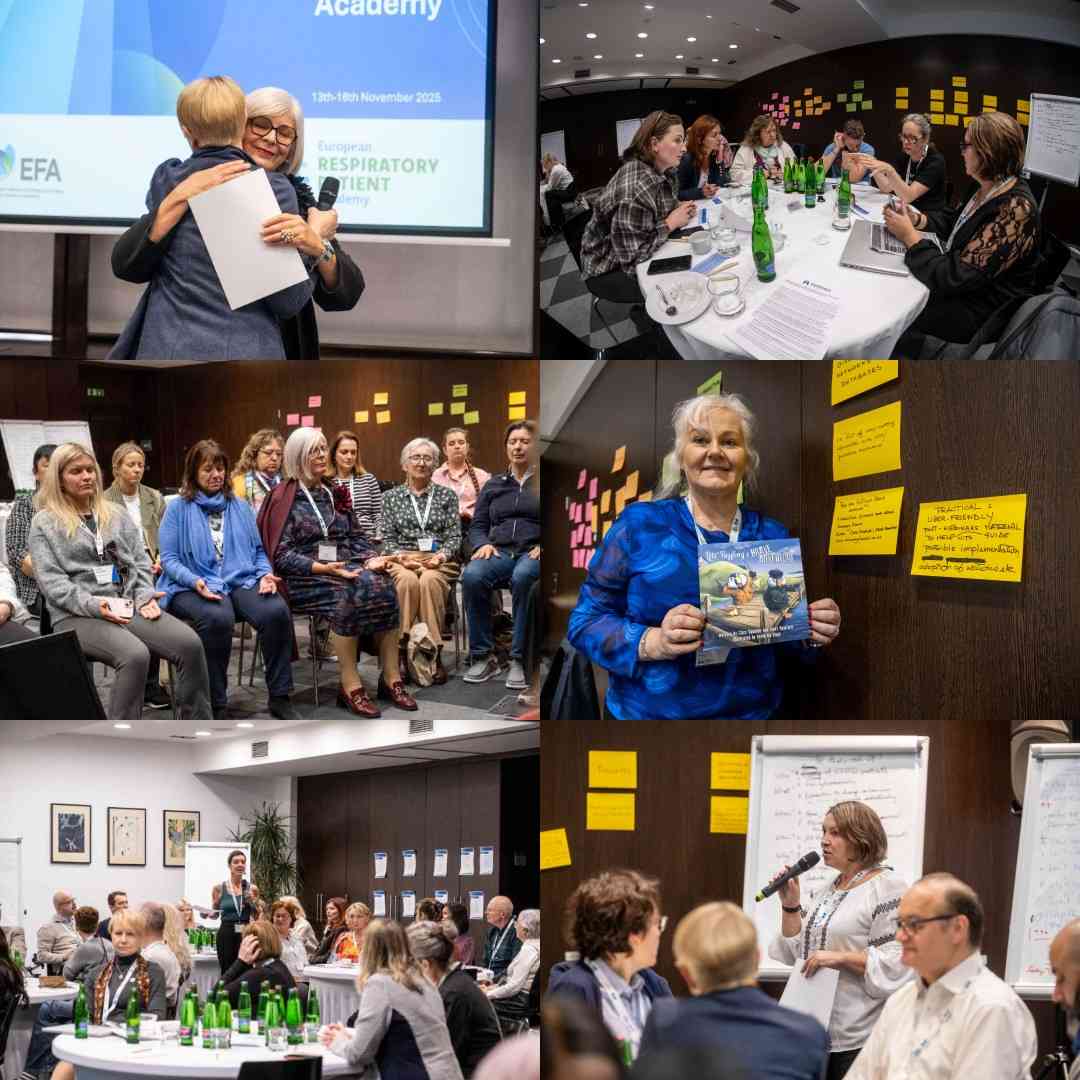
Participants strengthened advocacy, leadership and communication skills, and practiced using evidence and stakeholder engagement while keeping the patient voice central. Teams set objectives, mapped stakeholders and drafted plans to take home.
- Advocacy capacity strengthened: clearer goals, stronger cases, smarter coalitions.
- Research and data literacy strengthened: reading studies, assessing methods, using numbers with care while keeping the patient voice central.
- Understanding of systems, policy and access strengthened: where decisions happen, who shapes them, why value matters.
- Leadership, communication and governance strengthened: transparent processes, accountability and long-term sustainability for patient organisations.
“Your lived experience isn’t just valuable; it is essential to shaping better research, care and policy across Europe.”
— Marcia Podestà, EFA President and Chair of the Steering Committee
Read the full report of the first training.
Testimonies from trainees
“Interactive and engaging workshops, plus learning from different countries’ experiences.” — Clare Donohoe, EU-PFF
“A healthy mix of theory and practice—and exercises to understand barriers across diseases.” — Yuliia Kalancha, TB Europe Coalition
“Strategy planning matters. Break big goals into tasks and involve the right people—practical tools I’ll use.” — Kari Dakota Aasheim, Alpha-1 Europe Alliance
“Evidence-based advocacy is essential if we want real change.” — Claire McQuade, EFA
Watch a video recap of the first training on YouTube.
How to participate
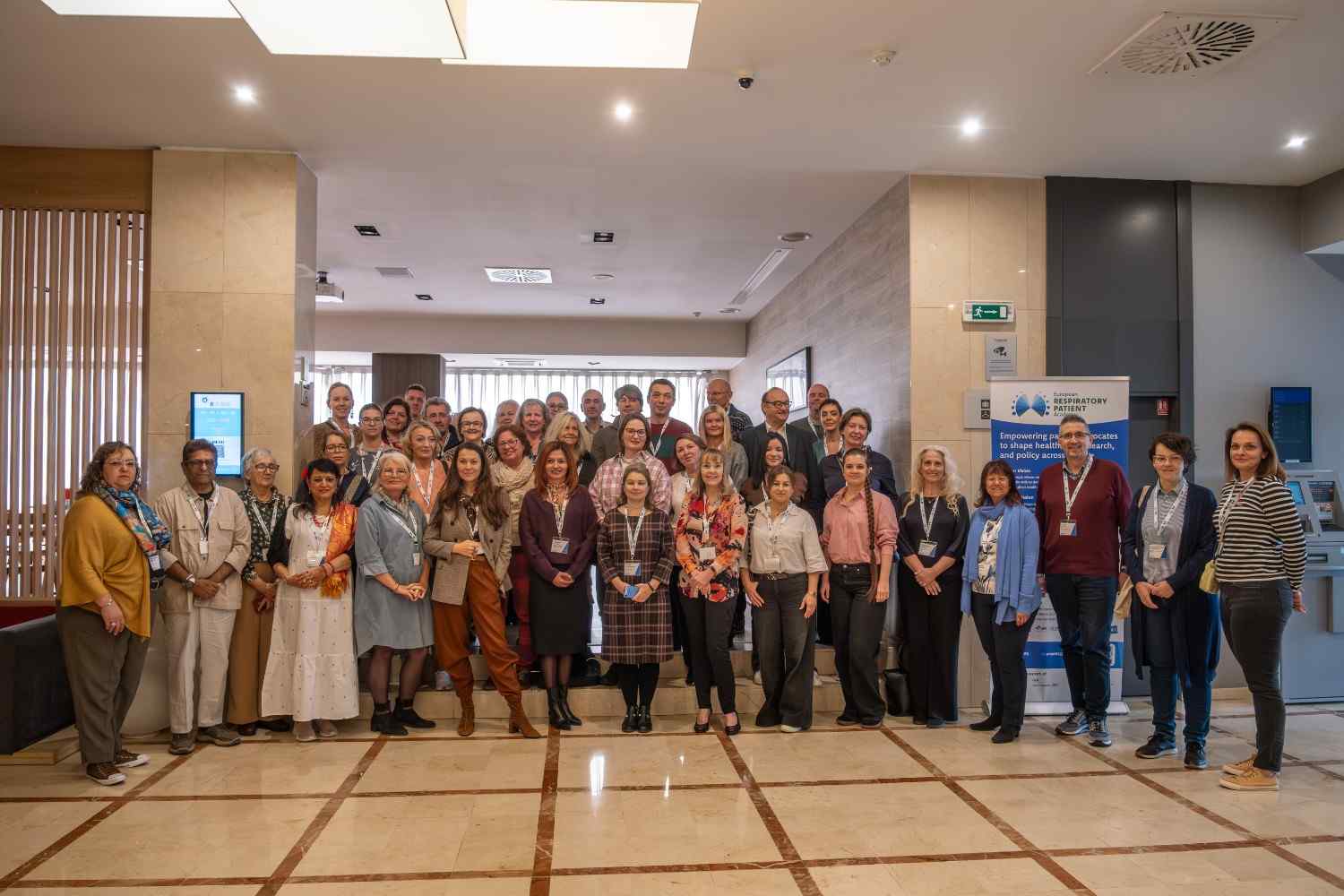
Applications for the 2026 training programme are now open for the Steering Committee patient organisations.
For general enquiries about the Academy, contact:

Acknowledgements 2026
EFA sincerely thanks our Sustainable Corporate Partners for their support for this project:
| Platinum |
|
| Gold |
|
| Silver |
|







Acknowledgements 2025
EFA also thanks our Sustainable Corporate Partners for their support for this project in 2025: AstraZeneca, GSK, Sanofi-Regeneron, Chiesi, Boehringer Ingelheim, MSD, Roche, Menarini Group.
[1] Including asthma, COPD, respiratory allergies, lung cancer, bronchiectasis, cystic fibrosis, pulmonary hypertension, idiopathic pulmonary fibrosis, tuberculosis and alpha-1 antitrypsin deficiency.